MoonMaid Botanicals is a health-focused e-commerce brand offering plant-based supplements and educational resources on hormone balance, mineral health, and vitality.
The redesign focused on clarifying the brand’s value proposition, reducing cognitive load, and guiding new users toward confident purchase decisions across key flows.
Role: UX/UI Designer
Tools: Figma, Midjourney,
Figjam
Timeline: 6 Weeks
Scope: Responsive e-commerce
website redesign
Problem
MoonMaid relied on loyal repeat customers, but the site offered little guidance for new visitors—making product discovery confusing and causing drop‑offs.
Client interview to understand business goals
Competitive analysis to identify modern ecommerce patterns
Usability testing on the old site to observe real shopping behavior
Product storytelling lacked clarity
Educational content felt overwhelming and unstructured
Users struggled to find products quickly
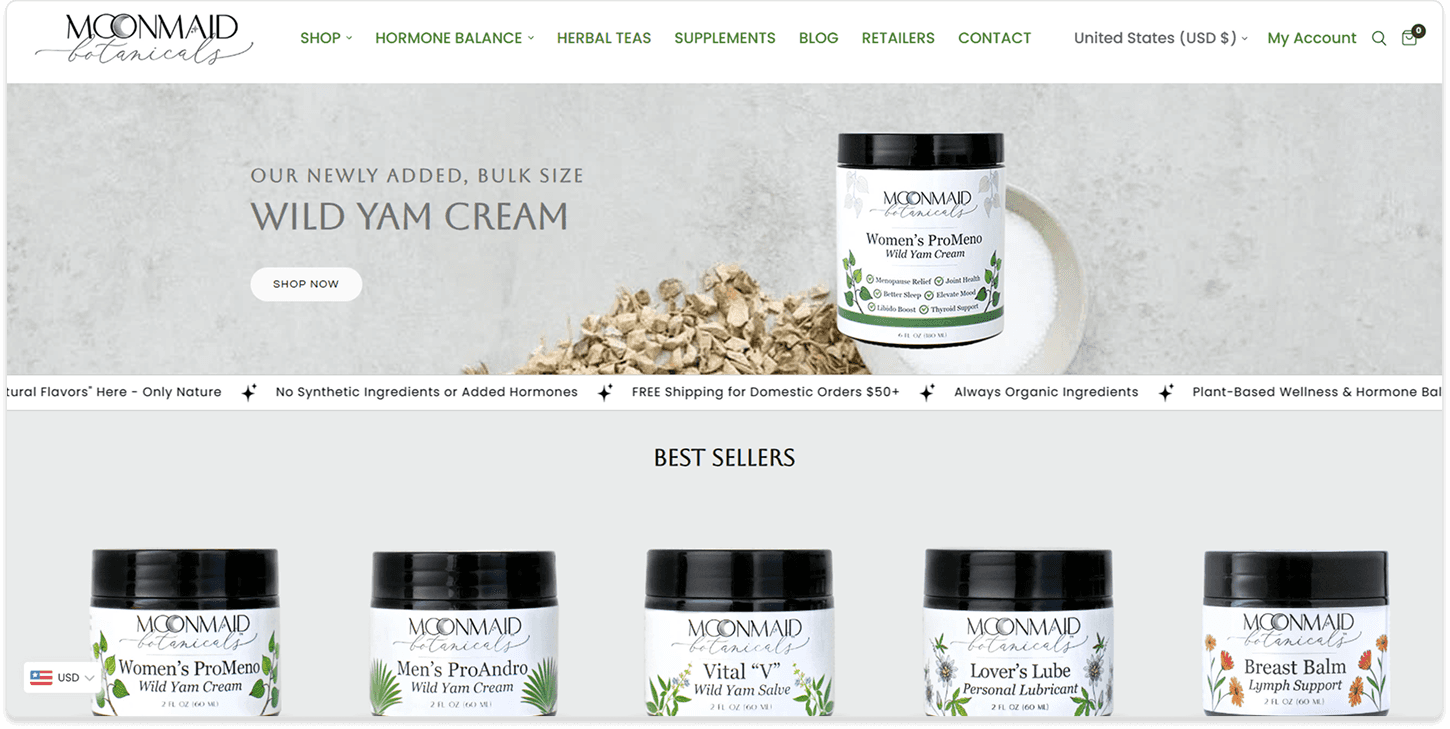
A visually dense homepage with no clear hierarchy made it hard for users to understand or discover products efficiently.
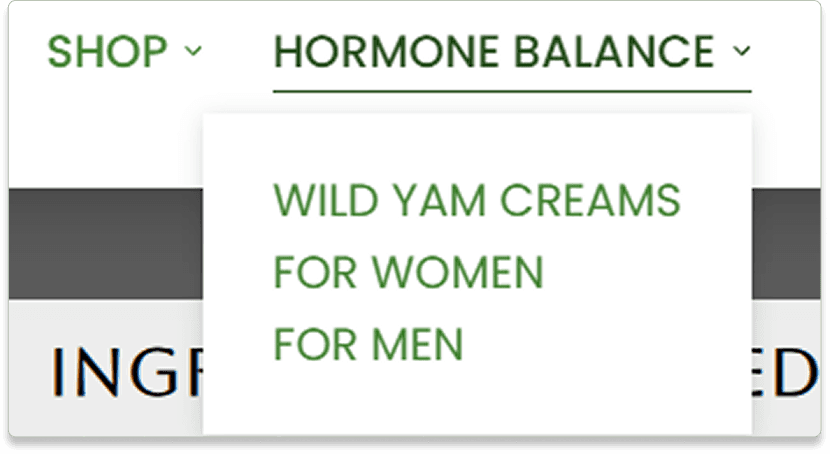
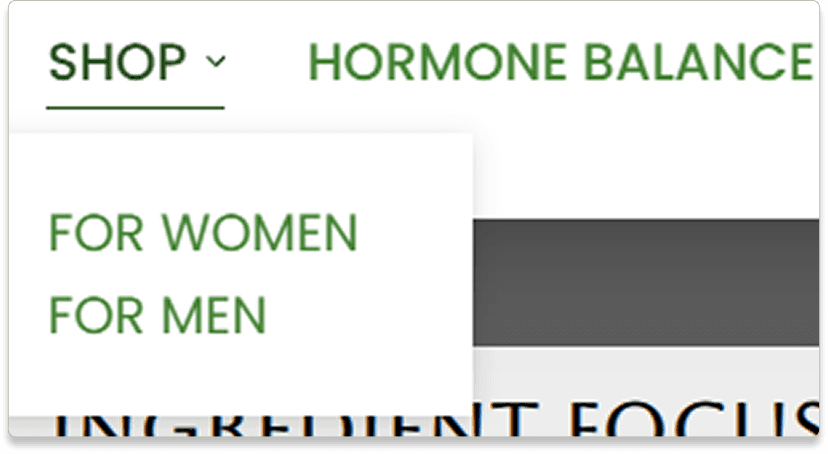
The navigation repeated the same category structure across two menus (“Shop” and “Hormone Balance”), creating unnecessary duplication and forcing users to re‑evaluate identical options.
I reorganized the navigation into three clear sections—Shop, Discover, and About—while grouping utility actions like Search, Account, and Cart on the right for clarity.
Mid Fidelity Exploration
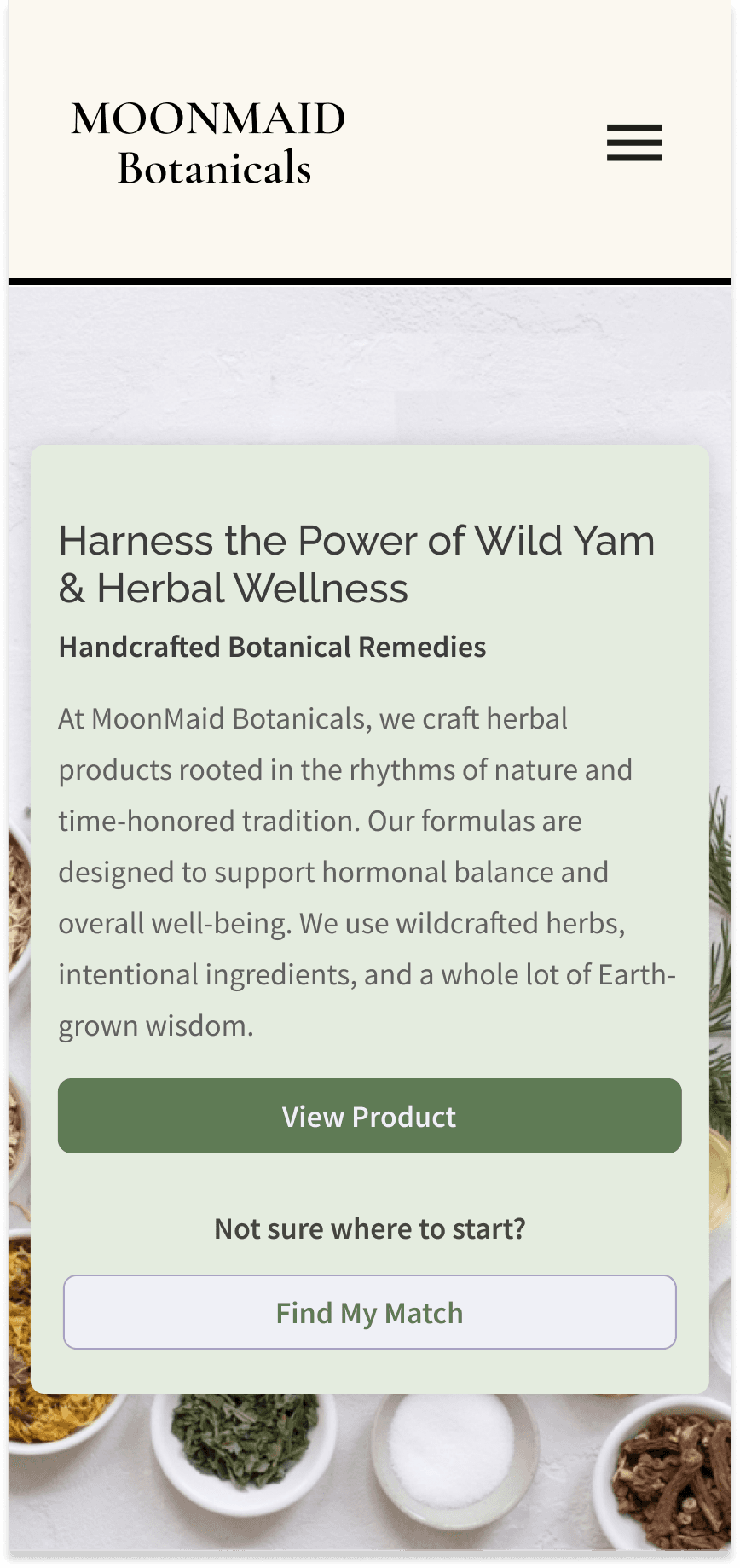
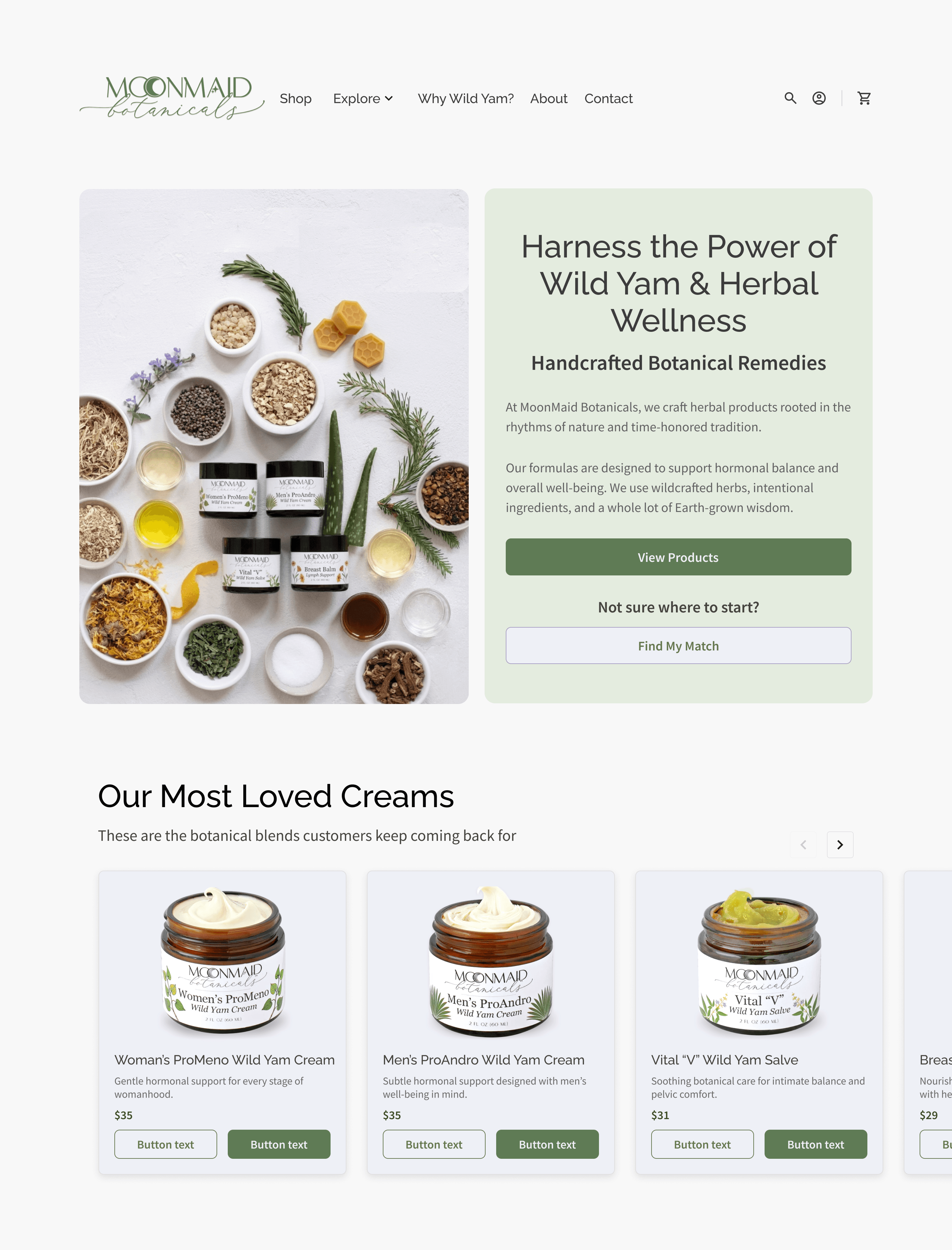
Our focus was product page hierarchy, simplified collection browsing, and early mobile-first prioritization.
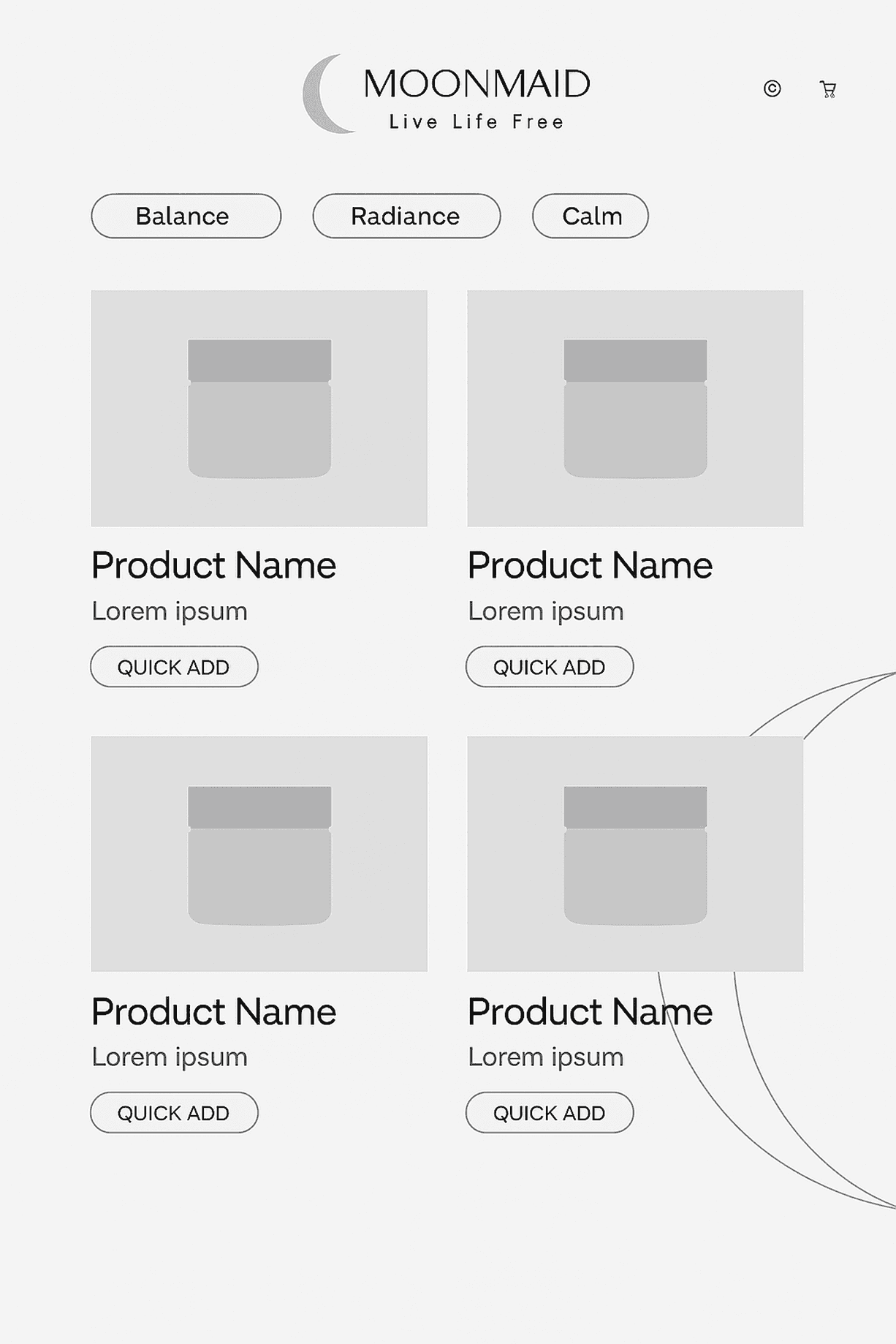
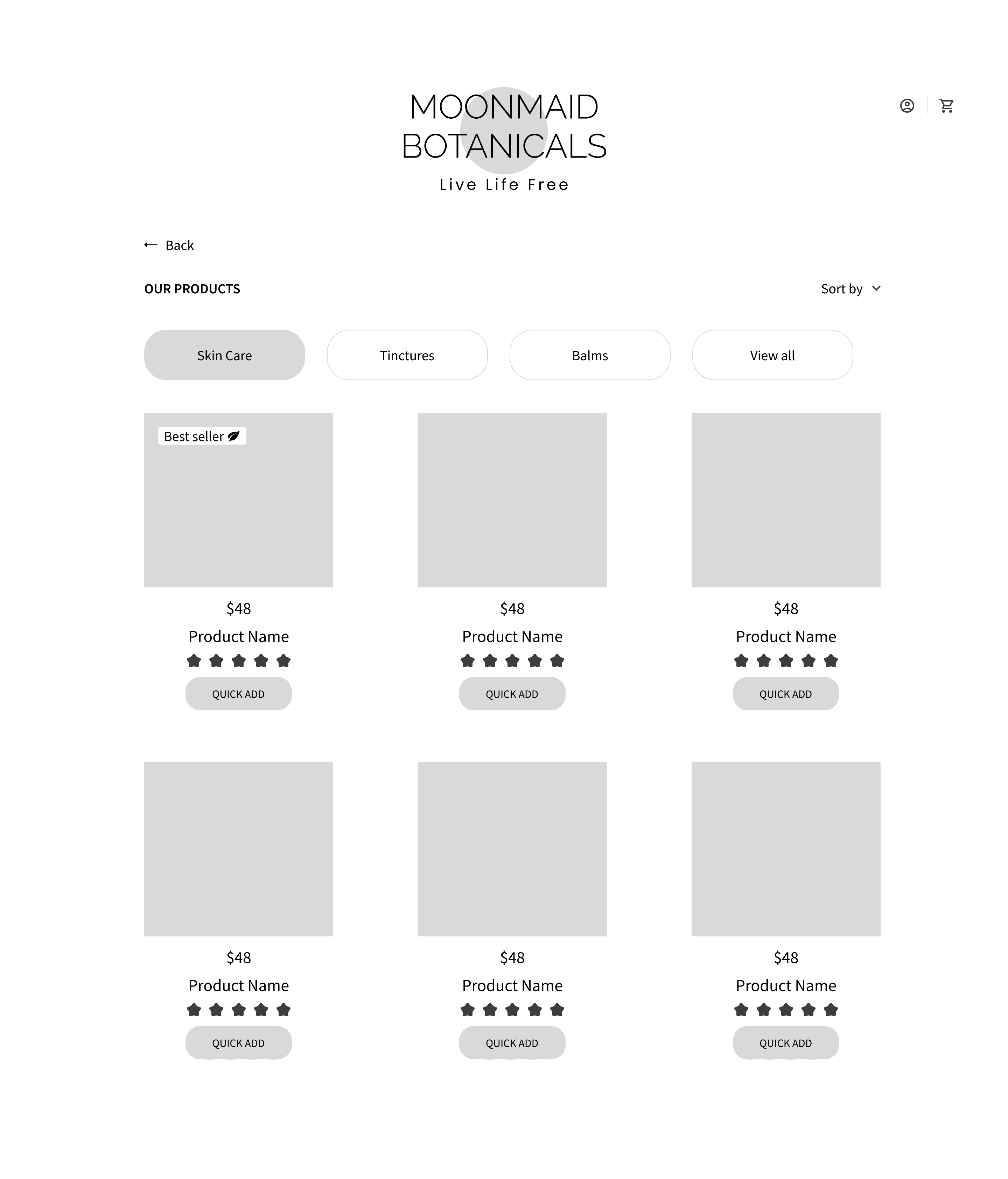
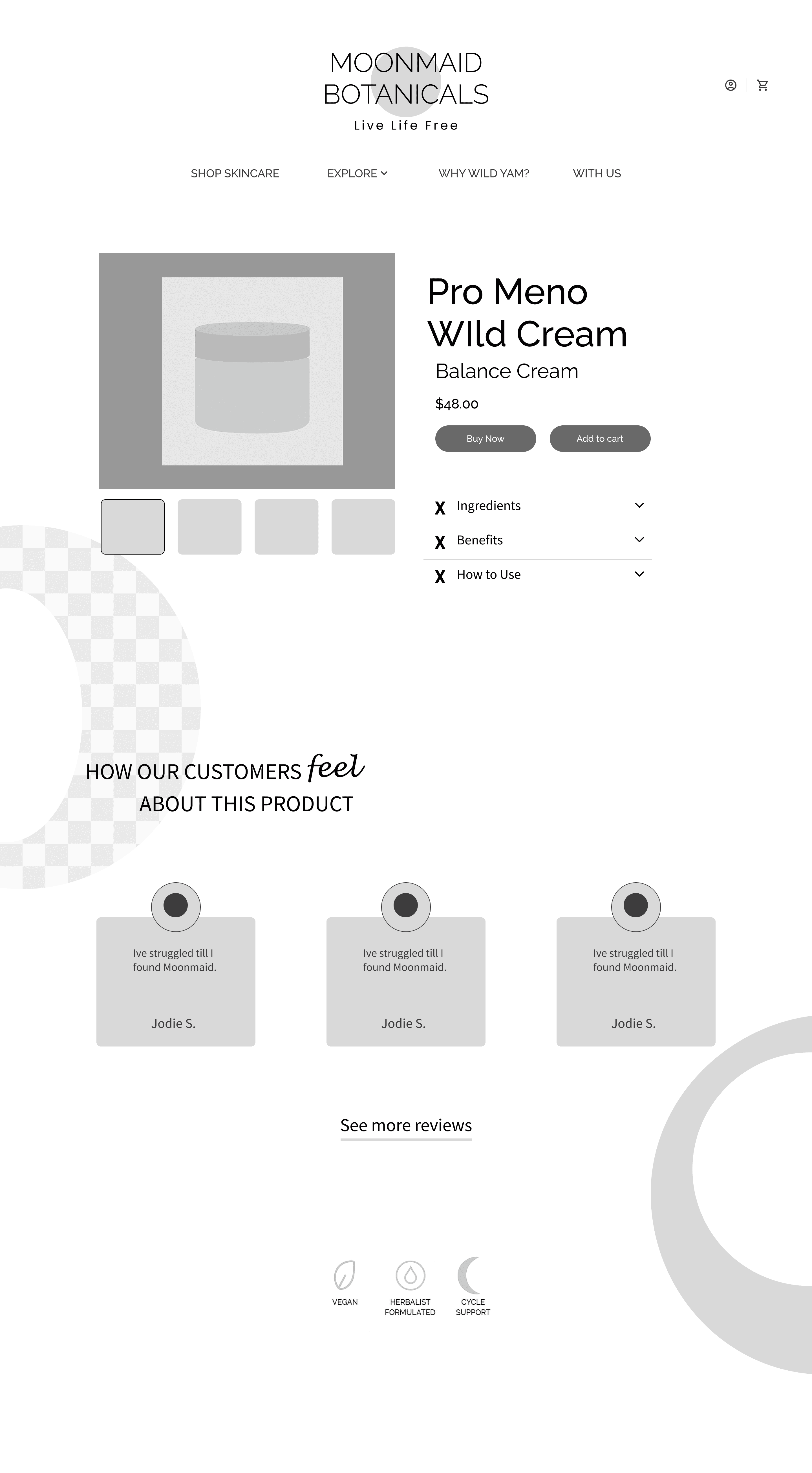
Users scanned product pages quickly but paused longer near price and CTA
Stakeholders noted the experience felt “clean” but didn’t emotionally capture
Usability signals suggest users needed a stronger emotional connection to feel confident selecting a product
Evaluate whether the new site architecture and category structure made it easier for users to find products and educational content.
Tree Testing
Usability sessions
Task-based navigation evaluation
Find a product for menopause
Find herbal information
Find the herbal glossary
The results showed strong task-completion rates across all navigation paths, fewer clicks needed to reach products/education content, and clear improvement in overall findability and flow efficiency.
Testing and client feedback clarified exactly where the experience needed refinement and how the final design should evolve.
Users completed tasks but still hit friction points
Educational content blended into product flows, causing small detours
Navigation worked, but visual cues weren’t strong enough to guide decisions
Stronger visuals to better communicate their herbal story and philosophy
Clearer labels and stronger grouping to reduce decision fatigue
A calmer, more intuitive layout that supports guided product discovery
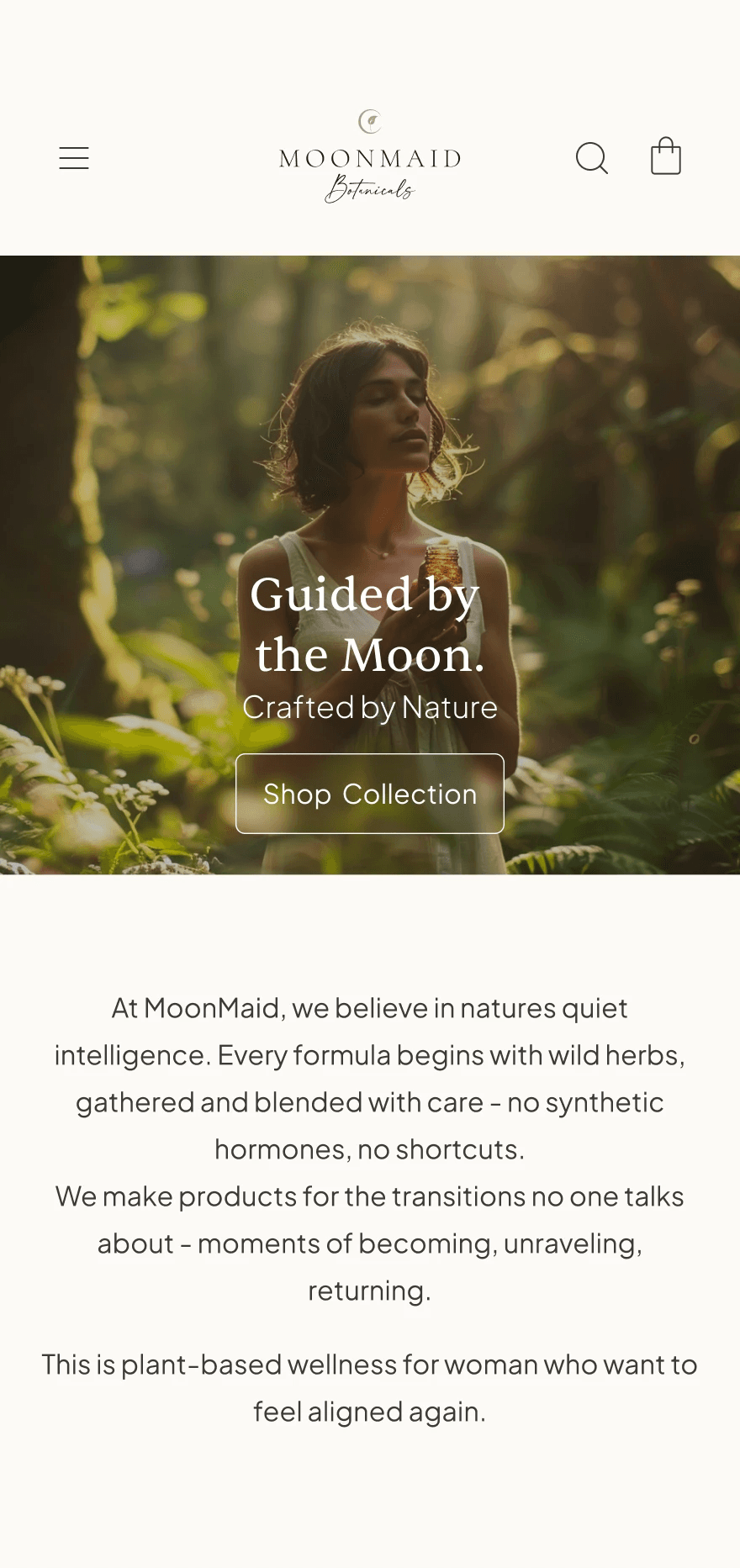
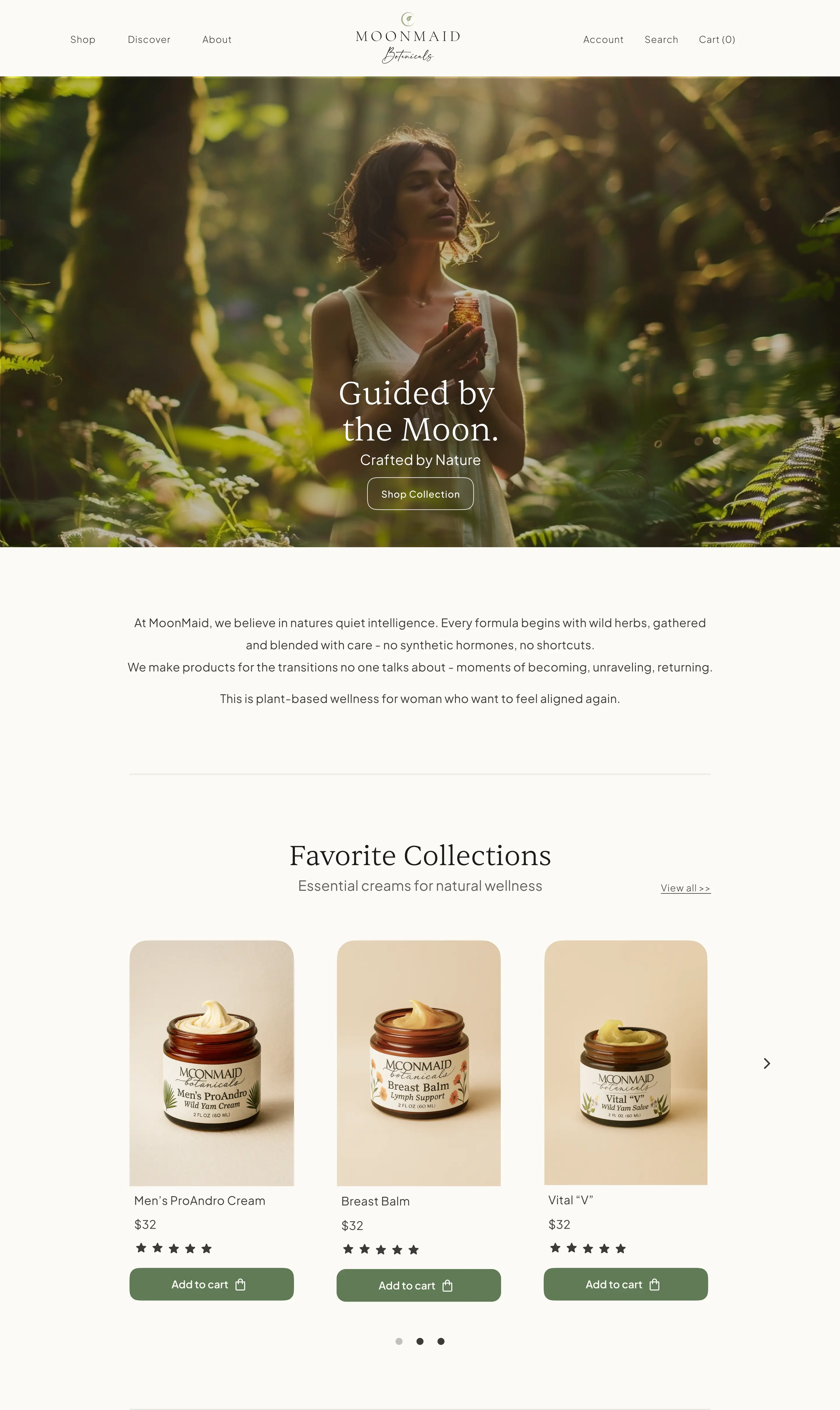
With stronger visuals anchoring the brand, the homepage now reduces cognitive load and creates a clearer first impression. Navigation is guided through explicit labels and tighter grouping, while educational content is repositioned to support product discovery.
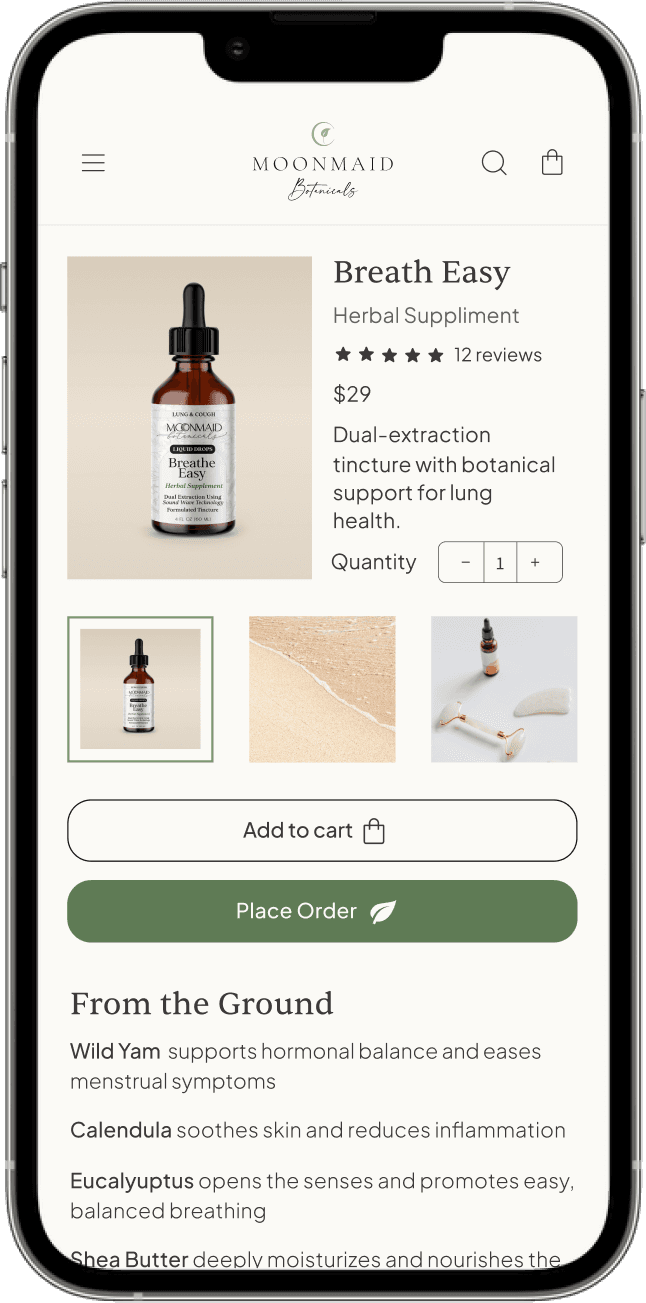
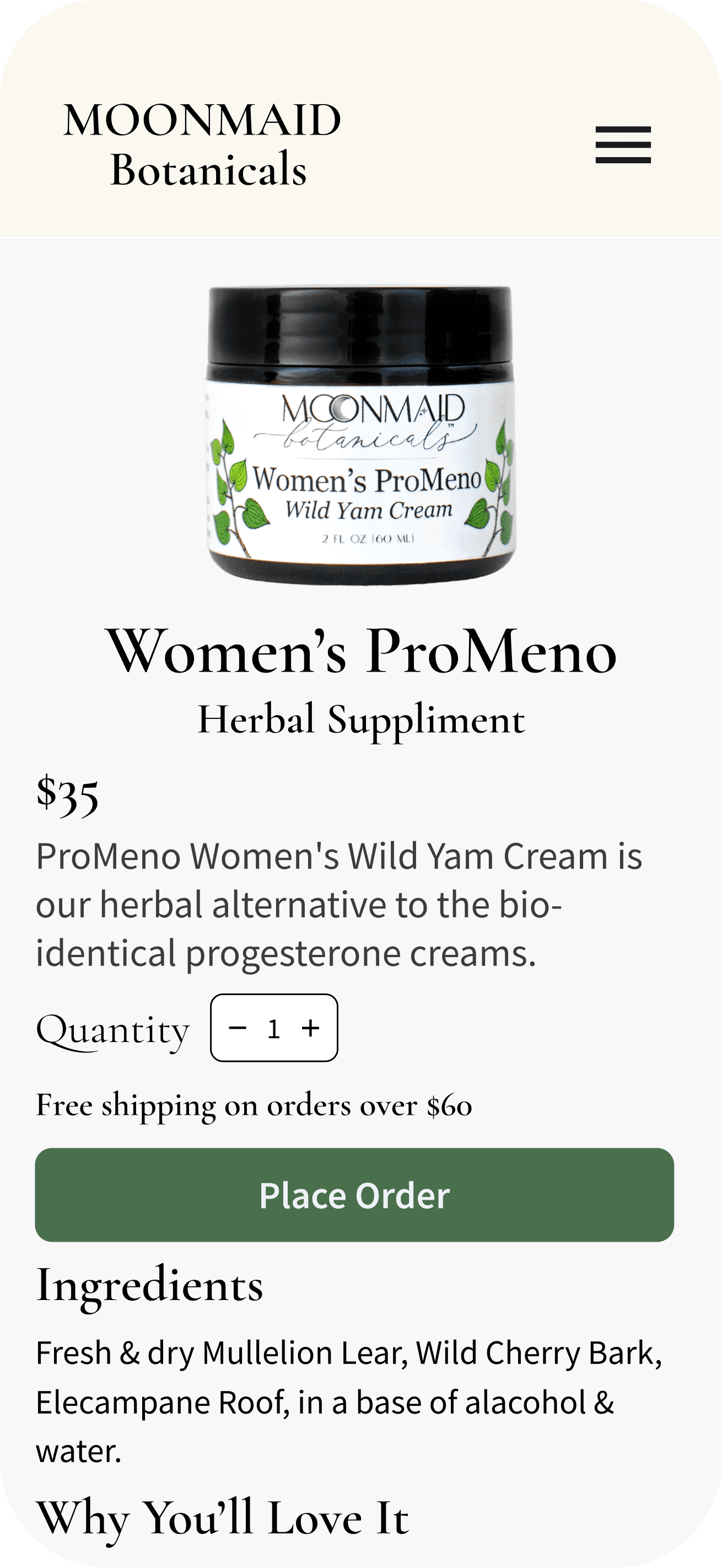
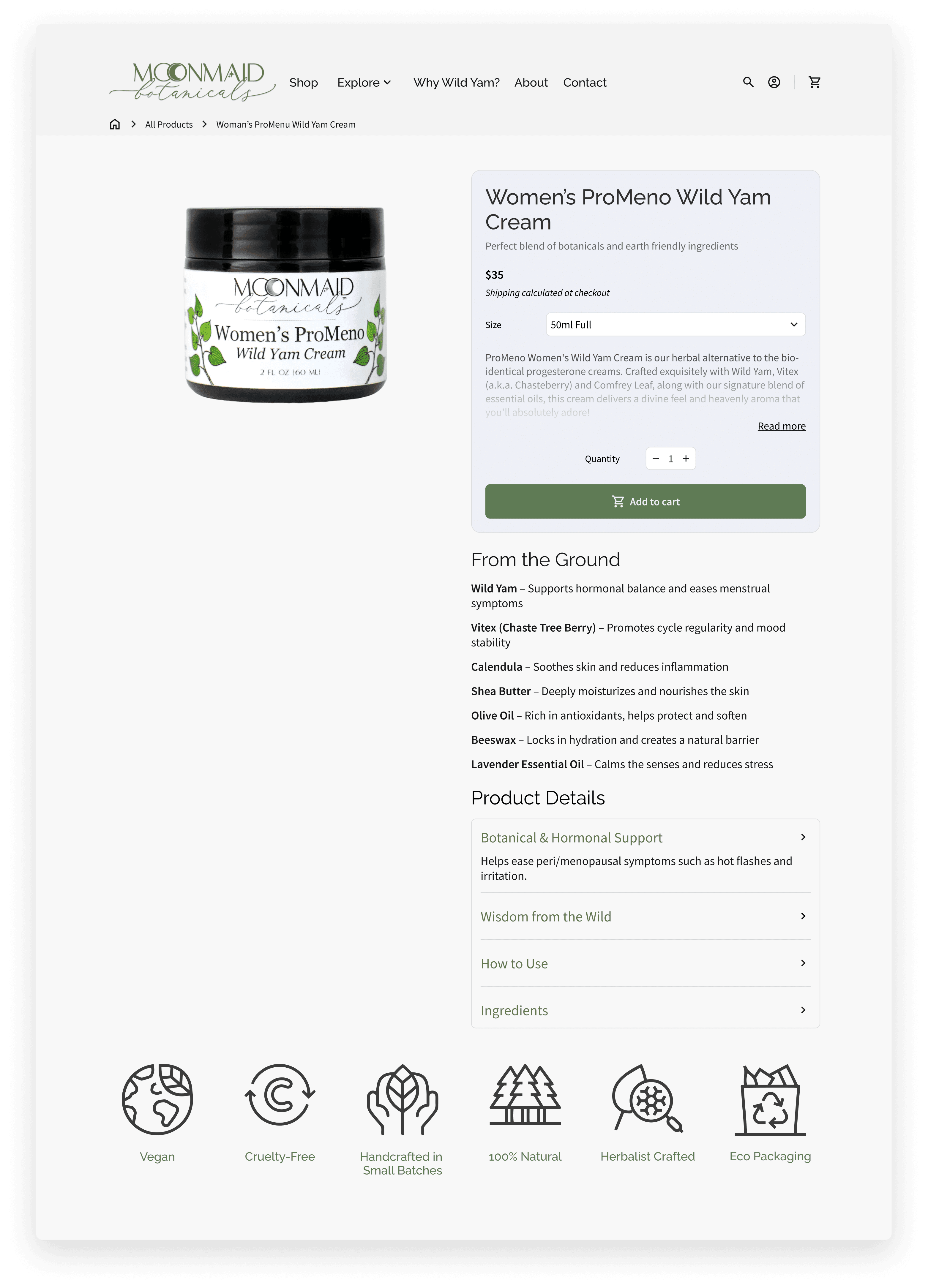
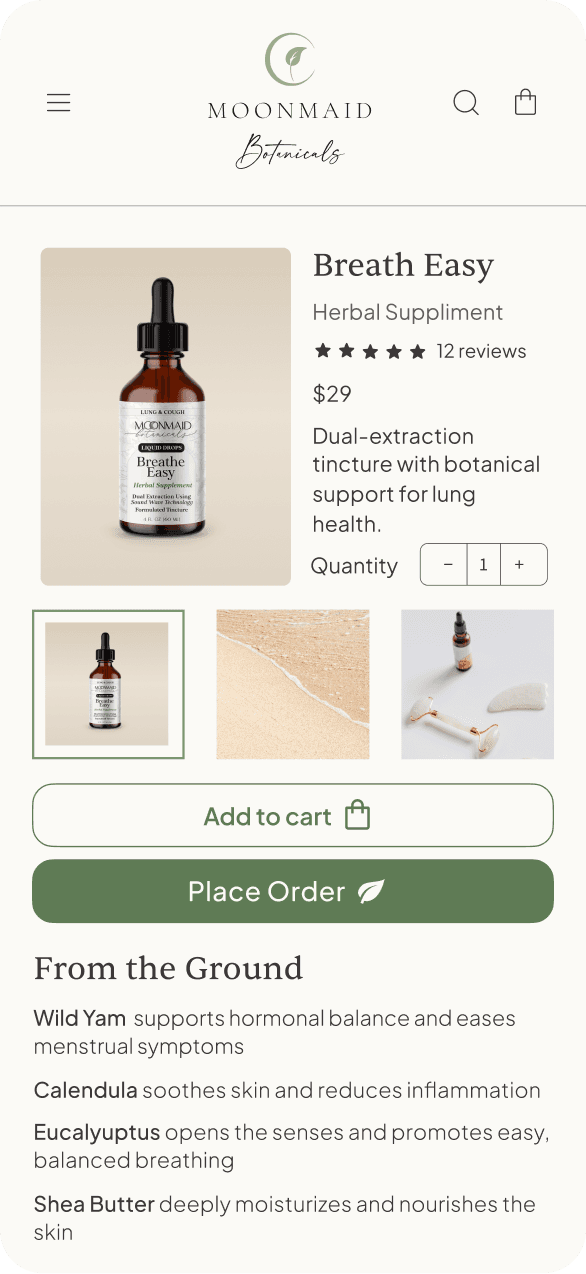
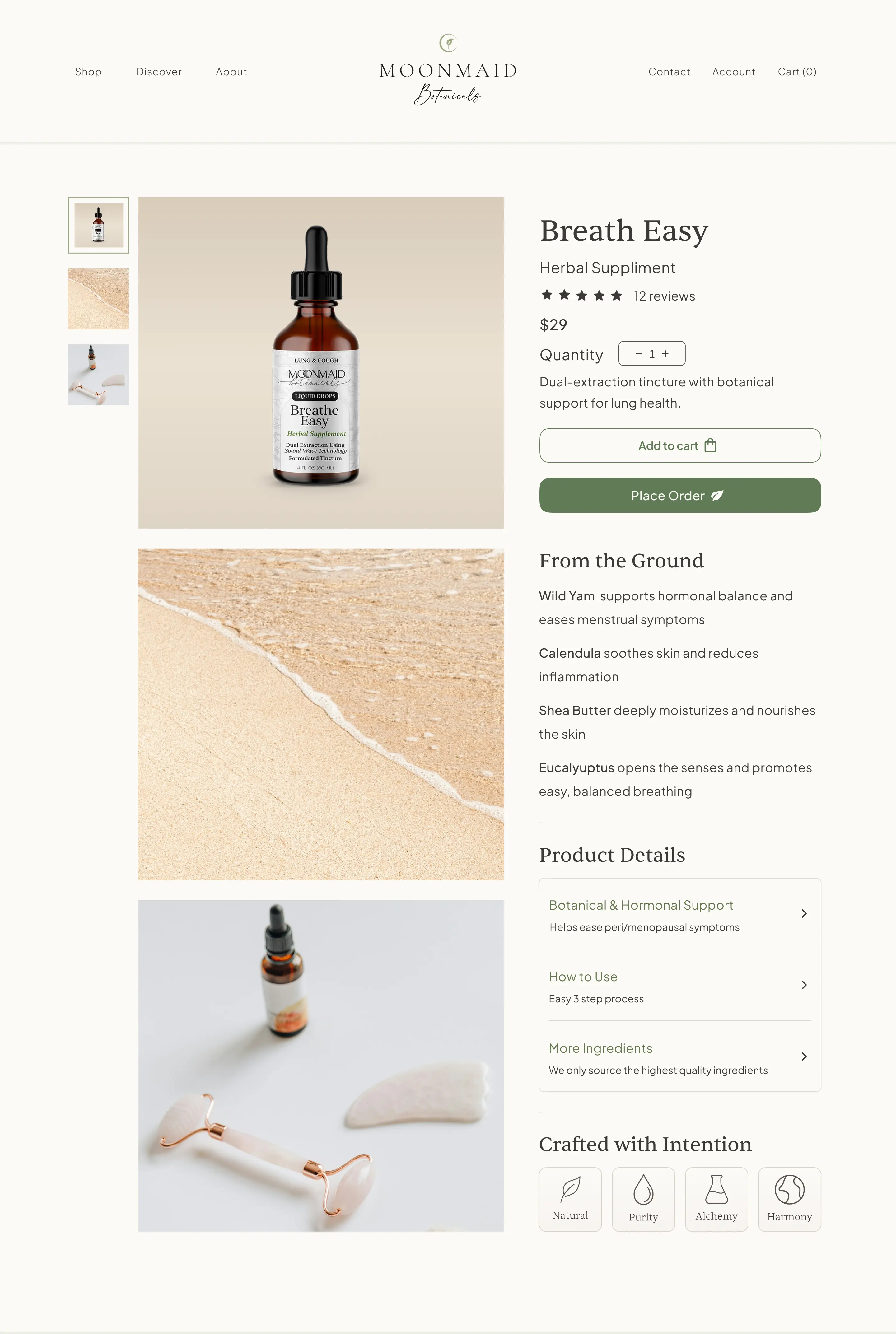
The product page highlights it's purpose, benefits, and key ingredients in a clean, intuitive sequence. This gives users the clarity they need to evaluate the product quickly and move toward a purchase with certainty.
This project taught me that people make better choices when the experience slows down enough to meet them where they are. MoonMaid’s original site put a lot of pressure on new customers, so most of my work focused on removing that pressure — not by adding more content, but by structuring it in a way that felt calm, intuitive, and supportive.
I treated education as a core design value, shaping how the quiz guides people, how product pages read, and how collections introduce themselves. I learned how thoughtful structure can lower cognitive load so people don’t have to work as hard to trust the experience.
The final iteration resolved the core issues surfaced in testing: users understood the products faster, moved through the quiz with less hesitation, and reached the right product pages with more confidence. The structure reduced cognitive load, clarified choices, and created a smoother path from learning to purchasing.
Validate the final design with real users to confirm that product selection, the quiz flow, and checkout feel as smooth and intuitive as intended.
Use early post‑launch data to fine‑tune how much guidance, education, and reassurance users need at each step of the journey.